No awkward silences. No sitting still. No pressure to perform. Just a space where you can be yourself.
A lot of young people - especially autistic and ADHD young people - have had experiences with therapy that felt pointless, uncomfortable, or just plain weird. Being asked to talk about your feelings with a stranger while sitting still in a clinical room is a genuinely big ask when your brain needs movement, stimulation, and connection to process things.
At Good Game, sessions happen in a low-demand, low-pressure space. We might play Minecraft together, go on a D&D adventure, explore something in Roblox, or just talk about a game you love. Play and gaming aren't just warm-ups - they're the therapy. Real insight, regulation, and growth happen through the game.
We use a person-centred approach, which means we follow your lead. There's no script, no agenda, and no pressure to be somewhere you're not. The relationship comes first - and everything else builds from there.

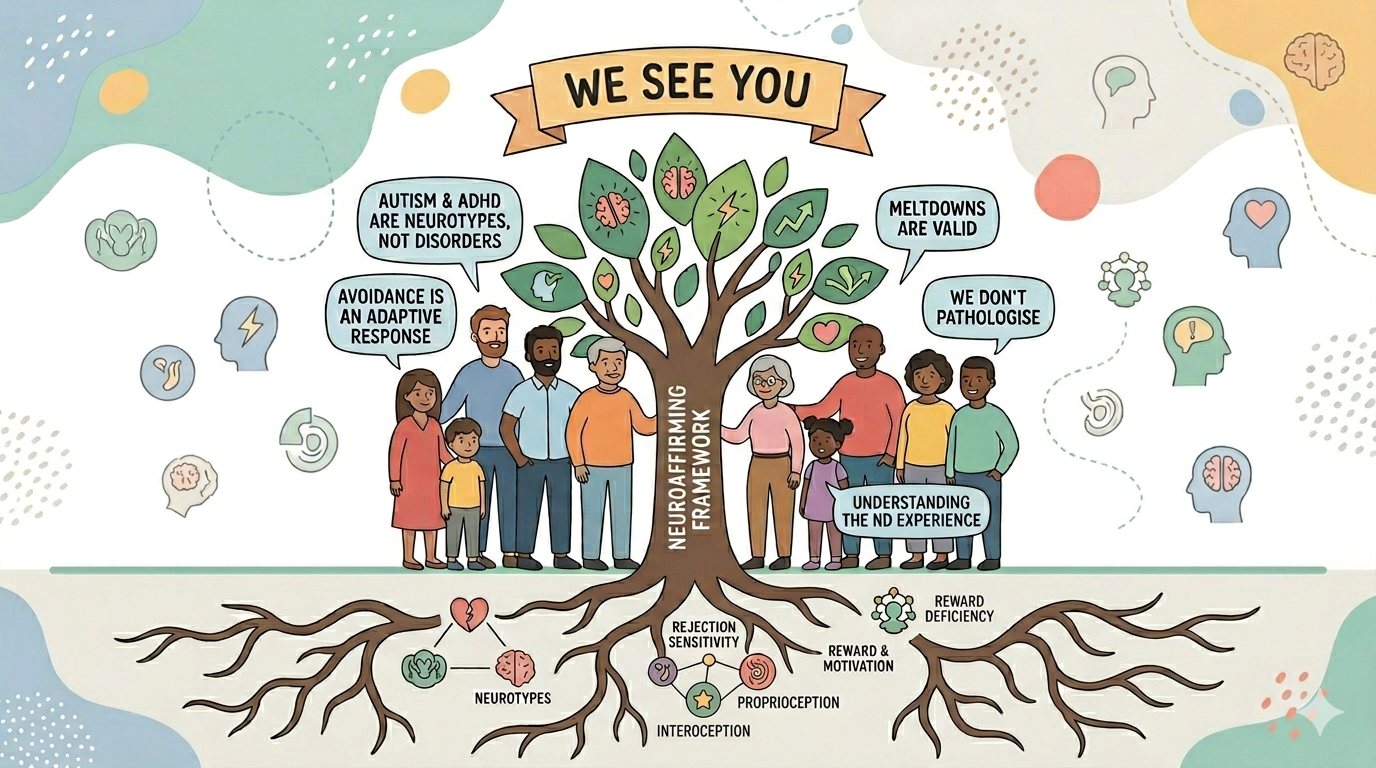
Our counsellors work within a neuroaffirming framework - which means we see autism and ADHD as neurotypes, not disorders. We understand that things like avoidance, shutdowns, meltdowns, and emotional dysregulation aren't signs that something is wrong with you. They're adaptive responses. We start from there.
We're particularly interested in the role of rejection sensitivity, reward and motivation, and interoception in how neurodivergent people experience the world. We don't pathologise. We try to understand.
Understanding what's driving the anxiety and building strategies that actually work for your nervous system.
Meltdowns, shutdowns, big feelings - working with your emotional responses rather than against them.
Navigating social situations, friendships, and connection in ways that feel genuine rather than scripted.
Exploring what's underneath school avoidance and building pathways back that don't involve pushing through.
Making sense of your diagnosis, your neurotype, and who you are - without fitting yourself into boxes.
Understanding rejection sensitivity dysphoria and building ways to manage its intensity and impact.
A relaxed, no-pressure chat to ask questions and work out if we're a good fit. We'll also talk about which counsellor makes the most sense for you.
We take it slow. The first few sessions are mostly about building relationship - through play, through games, through just hanging out online. Nothing heavy until you're ready.
Weekly or fortnightly, online or in-person. We build from the relationship and let things unfold. You don't need to have it figured out before you start.
We'll regularly review how things are going and shift our approach if needed. This is your process - your feedback shapes it.
Registered counsellors. All Good Game counsellors are registered with PACFA (Psychotherapy and Counselling Federation of Australia) or ACA (Australian Counselling Association).
Online anywhere in Australia, or in-person at our Nambour QLD location.
Sessions are held online via secure video call (typically using Zoom), and incorporate gaming or play-based activities where appropriate (PC, Xbox, PlayStation, Nintendo Switch, Tablet).
Standard sessions are 50-60 minutes.
Weekly or fortnightly, depending on what works for you.
$156.16 per session (NDIS Improved Daily Living rate).
We kindly ask for at least 24 hours notice if you need to reschedule. Sessions cancelled with less than 24 hours notice will incur the full session fee.
Finding the right therapist for your young person - especially one who's had difficult experiences with therapy before - can feel daunting. We get it.
We work with parents as collaborative partners, not background figures. We're happy to include you in goal-setting, provide updates (with your young person's agreement), and help you understand what we're working on and why.
Book a Free Chat